
International students and graduates
Should I use my home-country resume format or the local format?
Use the format of the country where the job is. Employers read resumes through their local expectations, and a format that is normal at home can look unusual elsewhere.
Things that often change between countries:
- Length (one page versus two or more).
- Whether a photo, date of birth or marital status is expected.
- Page size (A4 or US Letter).
- What the document is called (CV or resume).
- How much detail on education and school results.
If you are applying to jobs in two countries, keep two versions. A guide to resume formats by country and your careers service can help you choose.
A quick way to learn the local style is to collect three or four resumes from recent graduates in that country, for example through your careers service or alumni, and compare them with yours. Look at the order of sections, how much personal information they show and how they describe education. Then adjust your own layout, keeping your content honest and your achievements the same.
Reviewed · by the ResumeBuilder.ae editorial team
Templates to try
Free to edit and preview. Single-column layouts are the safest choice for applicant tracking systems.
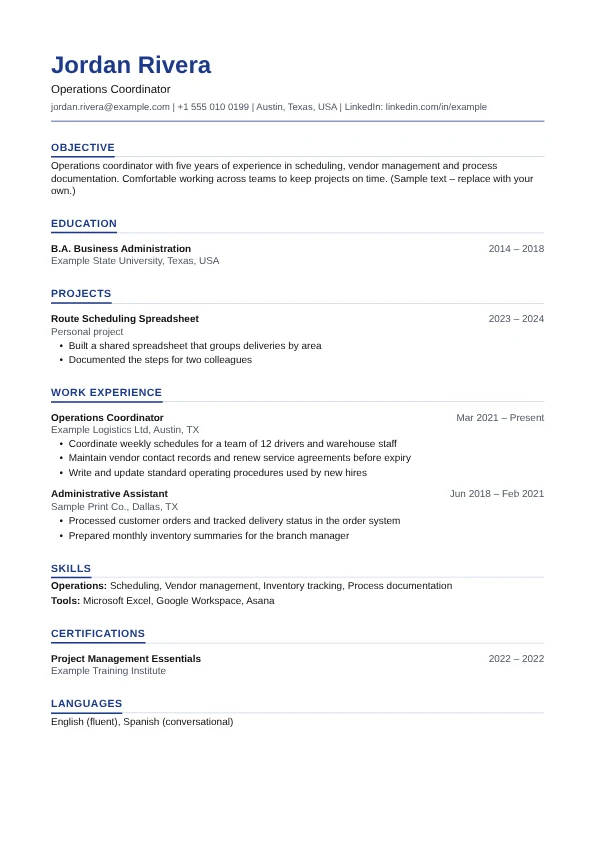
Graduate Resume
Single column

Student Resume
Single column

ATS Classic
Single column
General guidance for job seekers, not legal or immigration advice. Employers and applicant tracking systems differ, so always follow the instructions in the job advert. Spotted a mistake? Email support@jobb.ae.
Ready to build your resume?
Start with a sample or a blank page. No sign-up needed. Free to edit; US$1.00 only if you download a PDF.